 Back to works
Expanding Earn Beyond a Single Asset
Nanovest Earn was expanding beyond a simpler earning experience into one that could support multiple crypto assets and different program configurations.
Each program could come with its own yield, lock period, quota, minimum and maximum amount, and maturity behavior. The challenge was not simply adding more assets, but creating an experience that could handle those differences without making every program feel like a completely different product.
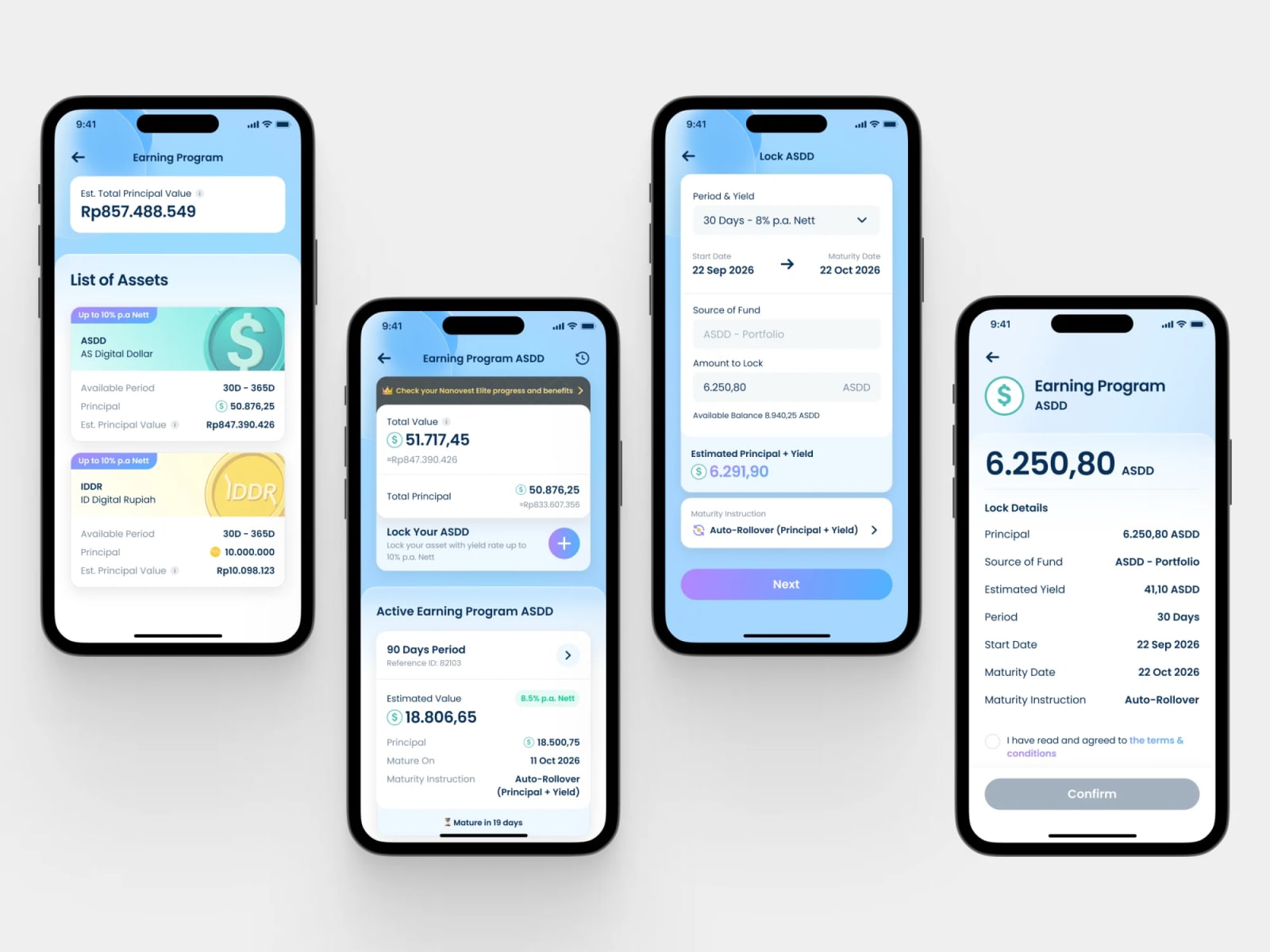 Image unavailable
Mapping the End-to-End Earn Journey
I mapped the experience as a complete earning lifecycle rather than focusing only on the subscription step.
Starting from the main Earn entry point, users could discover a program, choose the available period and yield, enter an amount, define their maturity instruction, review the transaction, and continue managing the position after it became active.
Looking at the journey end to end helped me identify where additional rules, validations, and transaction states needed to be handled.
 Image unavailable
Bringing Users Into Earn From Different Places
The main flow was not the only way users could reach Earn. Opportunities could also surface from other parts of the product, such as Wallet and asset-related screens.
I designed those entry points to lead into the same core earning experience while carrying over the relevant asset or program context.
 Image unavailable
Making Program Decisions Easier to Understand
Different programs could offer different earning periods, yields, limits, and available quotas. I separated program selection from the transaction step so users could first understand the available period and return before deciding how much to lock.
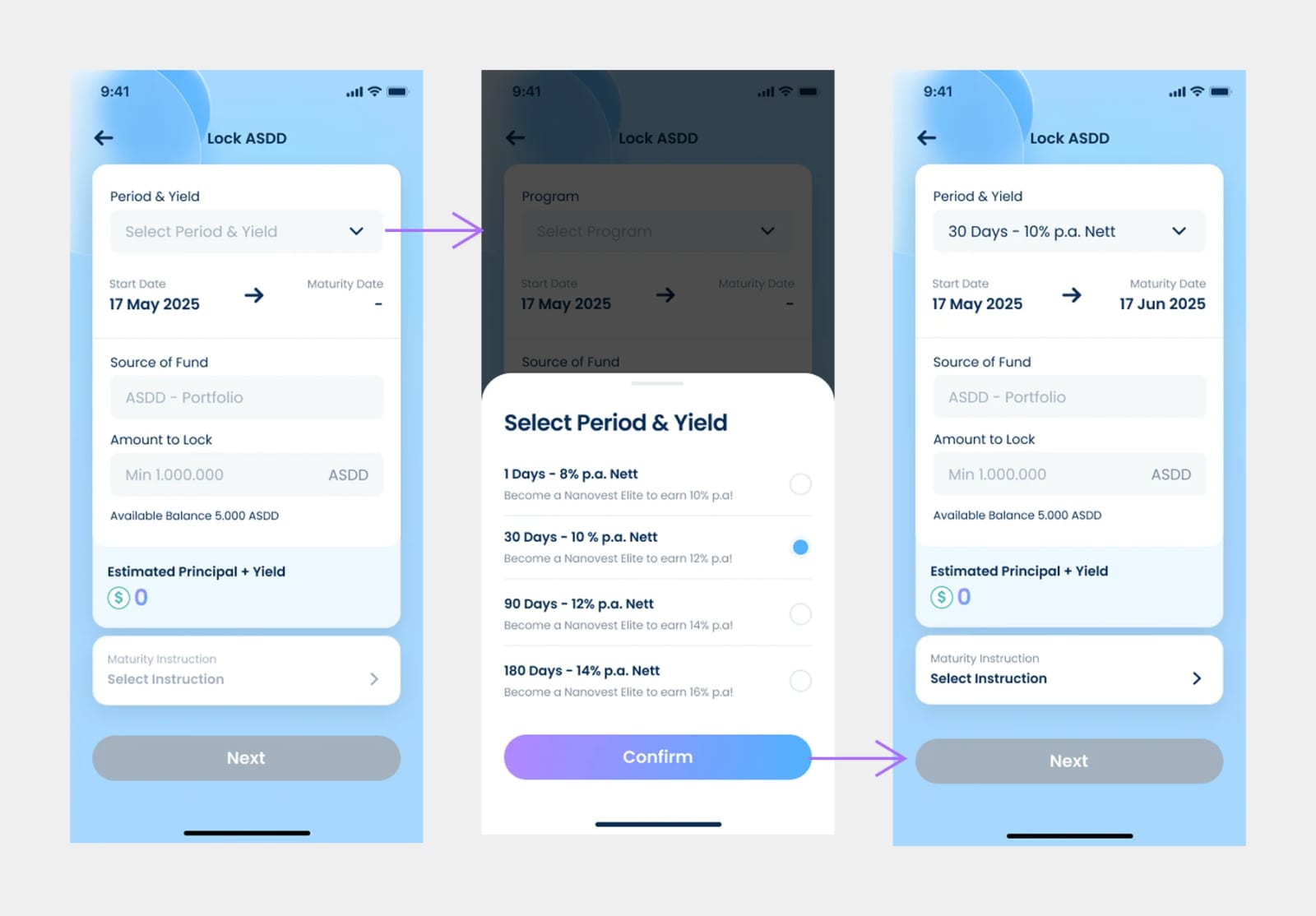 Image unavailable
The same flow also handled program-specific constraints such as minimum and maximum amounts, insufficient balance, remaining quota, and sold-out conditions.
 Image unavailable
Giving Users Control Over What Happens at Maturity
Locking an asset also required users to decide what should happen once the earning period ended. I made the maturity instruction explicit during subscription so users understood the expected behavior before confirming the transaction.
That preference remained manageable after the position became active, allowing users to review and update the instruction if their plan changed.
 Image unavailable
Designing Beyond the Happy Path
A subscription could still move through different states after the user submitted the request. I designed the transaction flow across PIN verification, processing, success, pending, and failure states, including cases where program availability changed while the transaction was being completed.
Each state needed to clearly explain what happened and what the user could do next
 Image unavailable
Closing the Loop After a Successful Subscription
The experience did not end on the success screen. After a successful subscription, I also designed supporting push notifications and email communication to confirm the activity and keep users informed outside the app.
Back inside Nanovest, the experience shifted from completing a transaction to monitoring an active position, with access to principal, accumulated earnings, maturity date, maturity instruction, and transaction history.
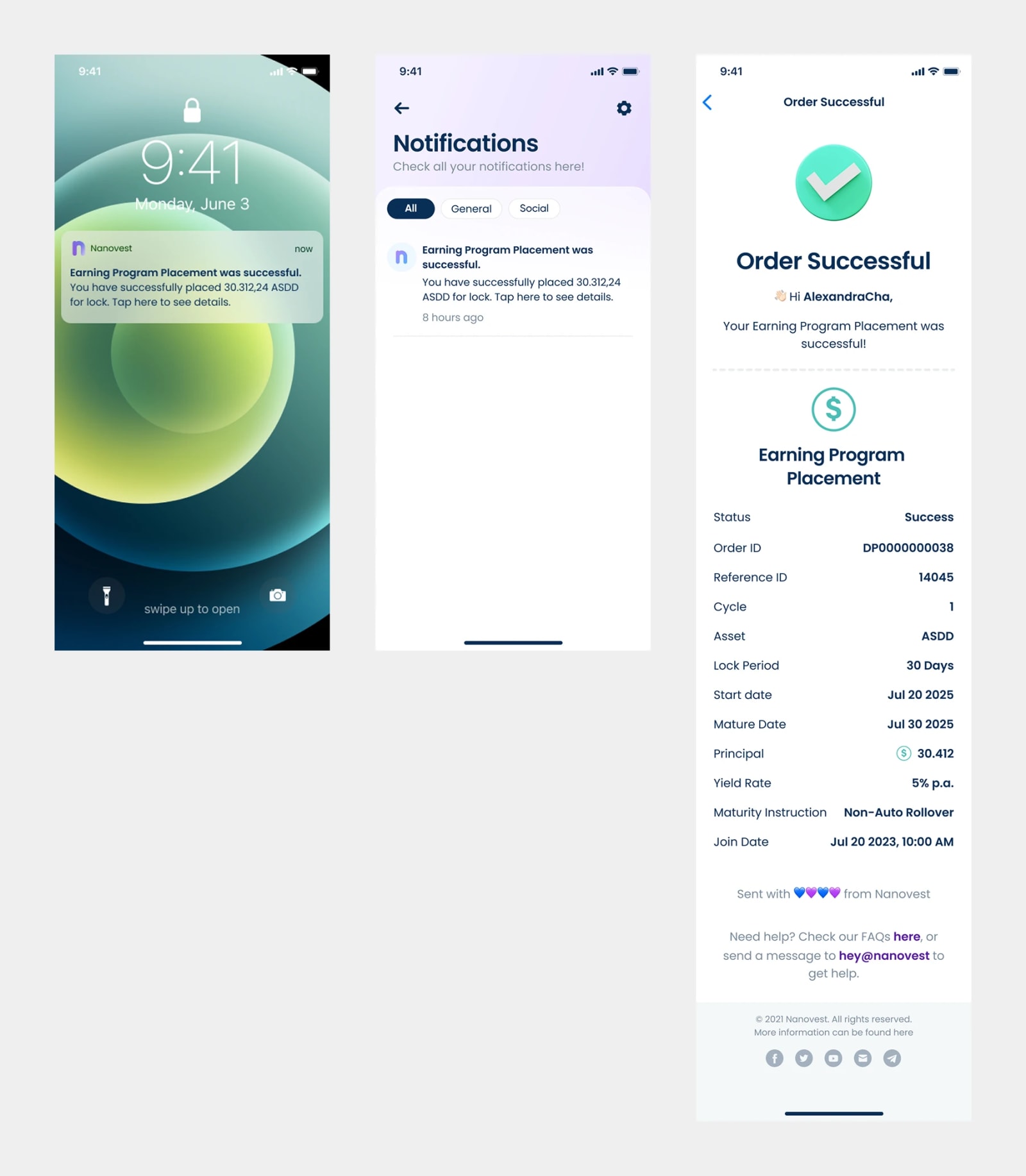 Image unavailable
What This Version Established
This version established an early multi-asset Earn experience across program discovery, subscription rules, maturity preferences, transaction states, and post-subscription management.
By structuring the product around a shared earning lifecycle, different assets and program configurations could fit into the same overall interaction model without requiring a completely different experience for each program.
This case study reflects the version I worked on at Nanovest. The product has since continued to evolve through later iterations by the product design team.
