 Back to works
Designing for a Different Kind of Investor
Nanovest originally focused on a simpler investment experience for retail users. Prime introduced a different challenge: creating a web-based platform for institutional clients who needed to manage larger transactions, more financial information, and increasingly advanced investment workflows.
My role expanded beyond designing individual screens. I needed to think about how trading, portfolio management, and earning products could eventually work as one scalable experience.
I focused on the core Prime experience across trading, portfolio, Earn, and the design system, while another designer worked on the login and KYC flows.
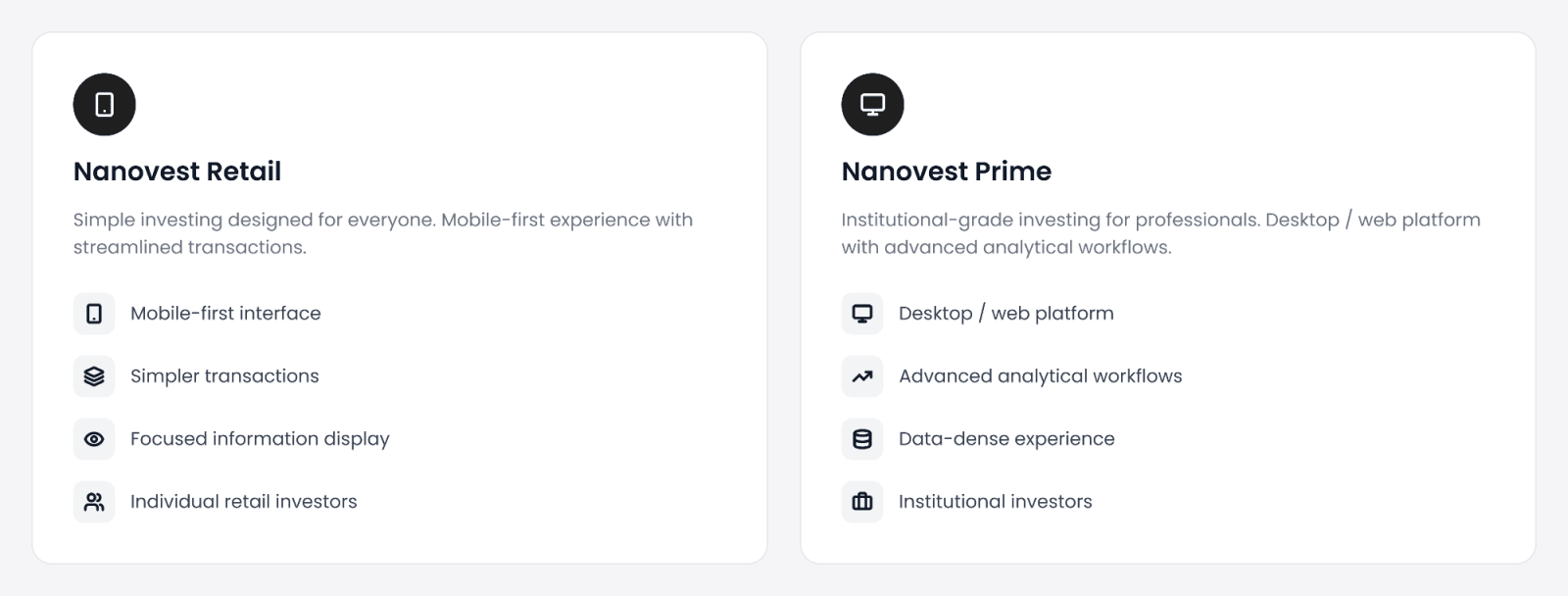 Image unavailable
Designing Beyond the First Release
One of the biggest challenges was that the product roadmap was larger than what could be built in the first release.
Instead of designing only for the immediate requirements, I explored how the experience could work once more advanced capabilities were introduced. This gave us a clearer product structure first, which could then be simplified for what was actually ready to ship.
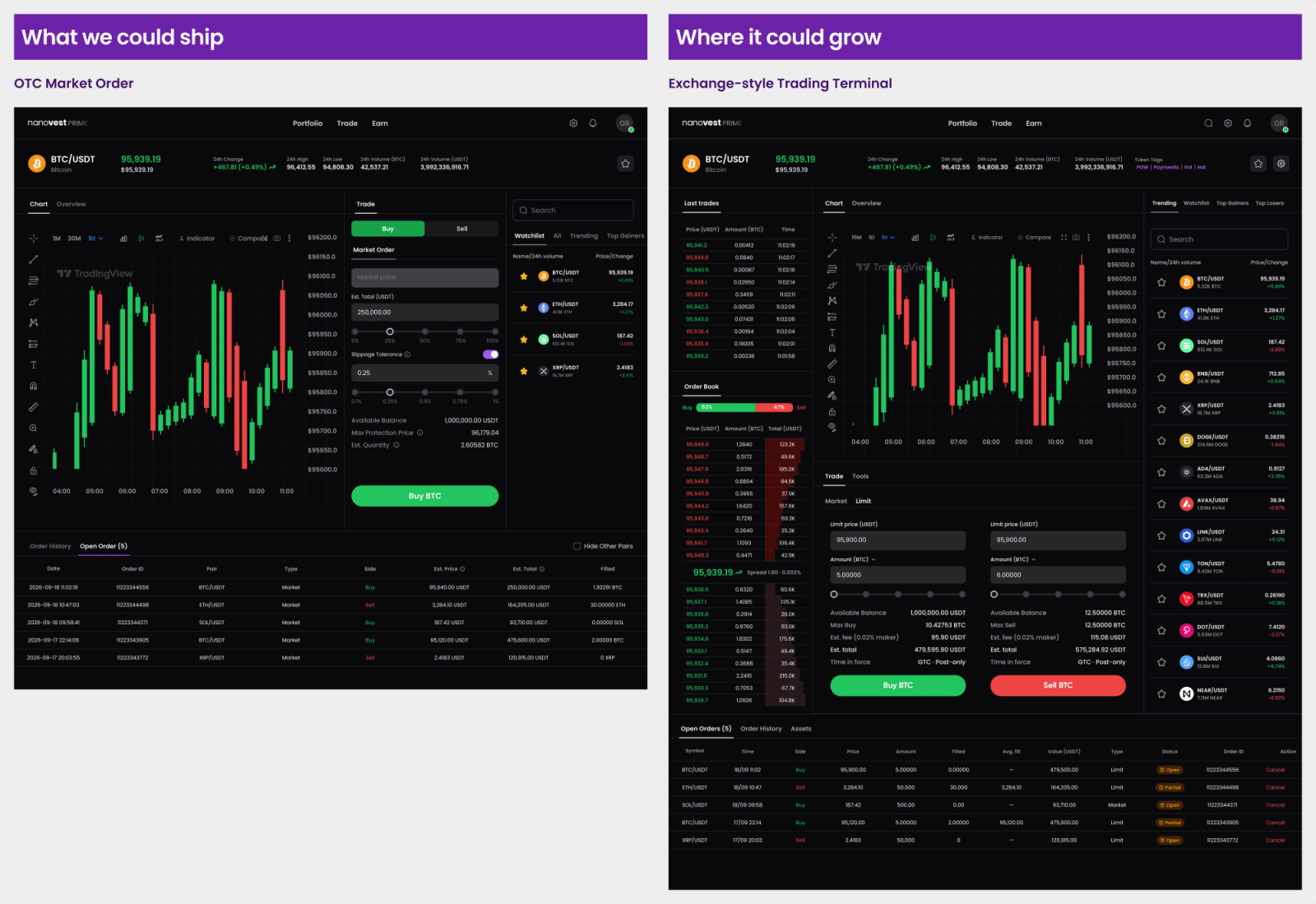 Image unavailable
Designing the destination first helped me make better decisions about what V1 could remove without limiting future growth.
Learning the Patterns Traders Already Know
Before defining the trading workspace, I looked at established platforms such as Binance, Coinbase, and OKX to understand the interaction patterns professional traders were already familiar with.
I focused less on their visual styles and more on how they structured recurring information and actions: market movement, order books, order entry, open orders, and asset discovery.
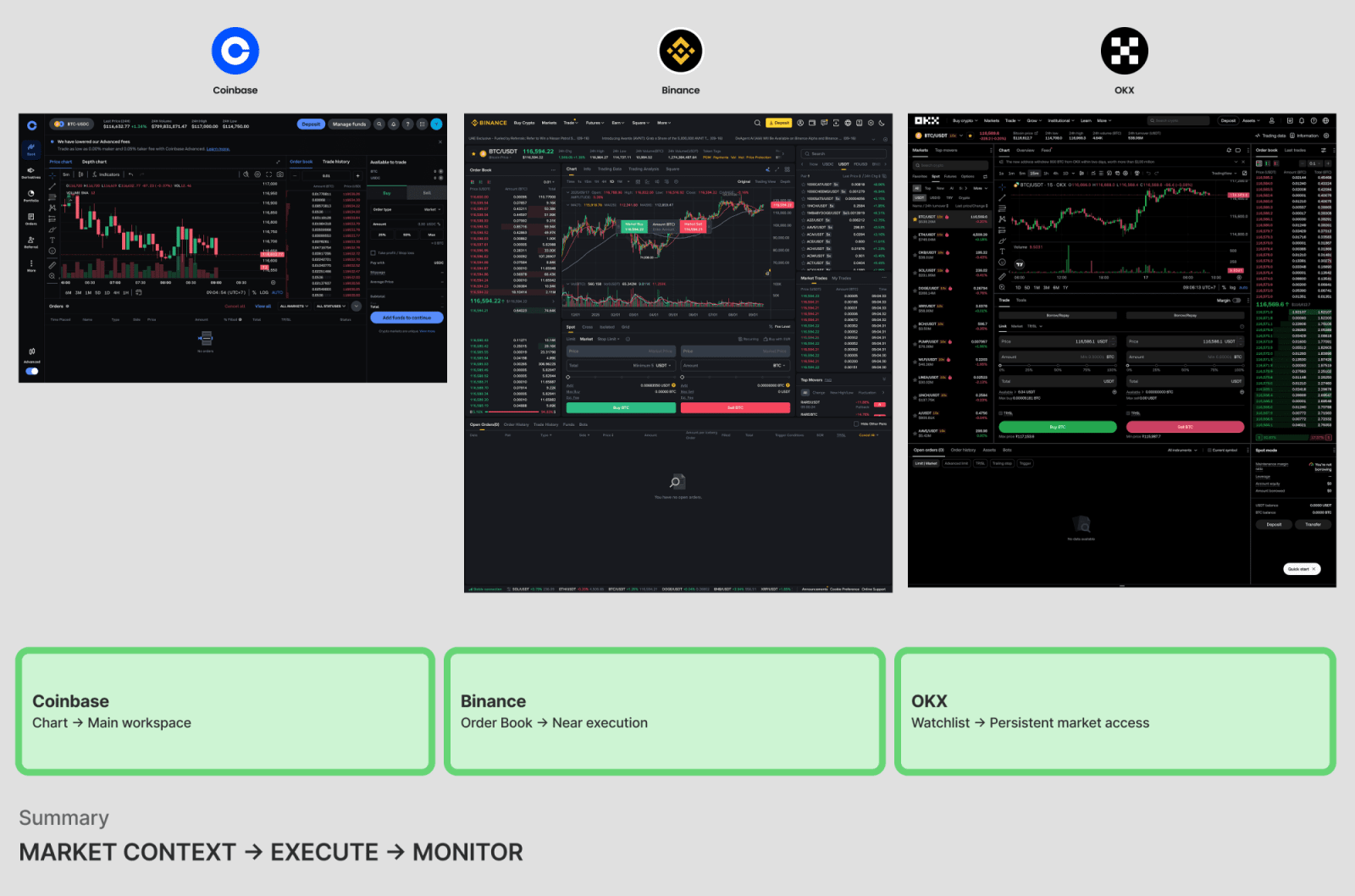 Image unavailable
Across the platforms, the core pattern was consistent: market context and execution needed to stay close together. Traders should be able to understand what is happening, place an order, and monitor its status without constantly moving between different parts of the product.
From Research to a Complete Trading Workspace
Those patterns became the foundation for a more complete Prime trading workspace. I designed the terminal around a modular structure where market activity, charting, asset discovery, order entry, and order monitoring could coexist in one workspace. The goal was to make the experience feel familiar to experienced traders while giving Nanovest room to introduce more advanced capabilities over time.
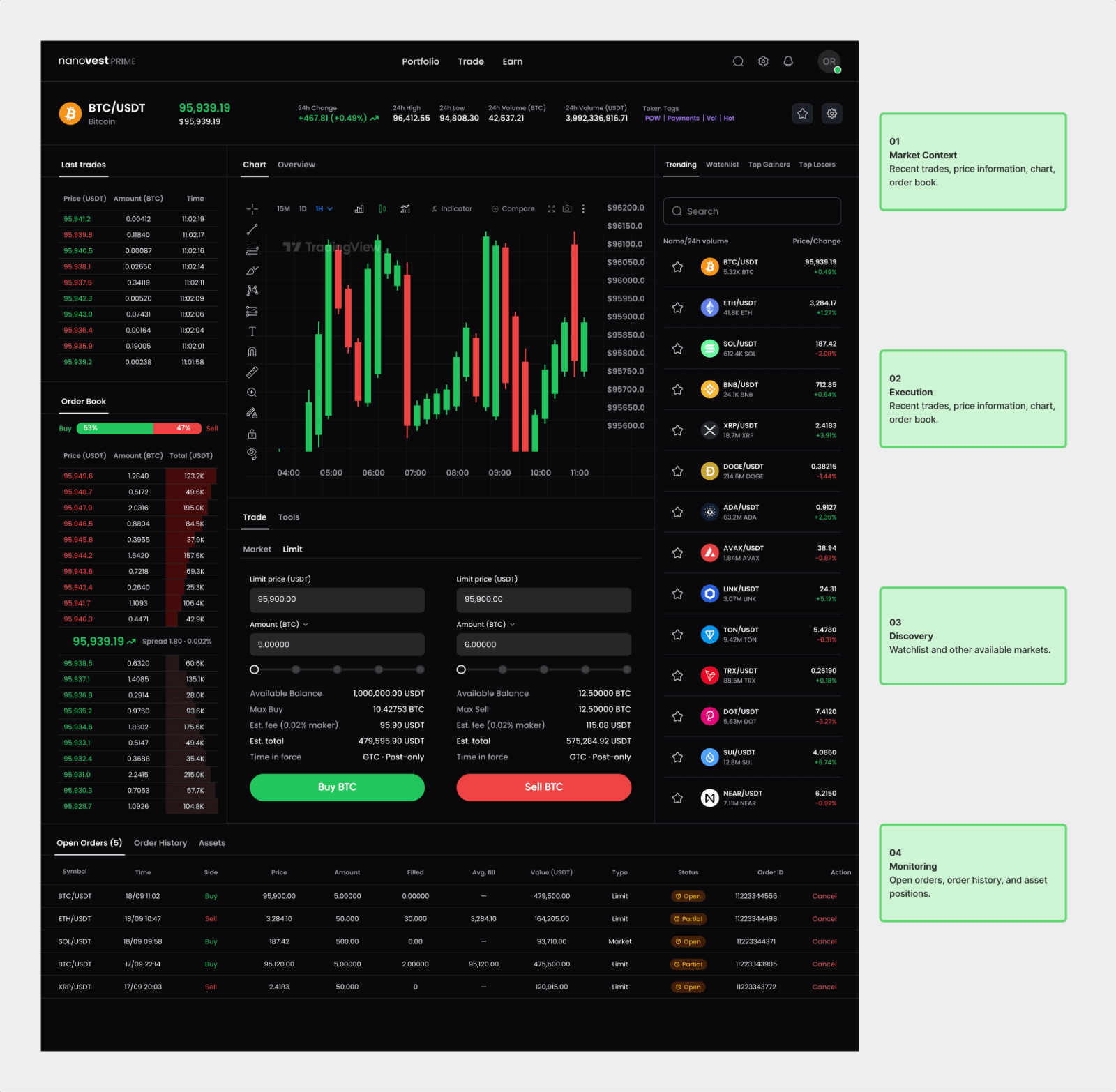 Image unavailable
Scaling the Terminal Back for OTC
The first release did not need everything from the future trading terminal. Prime initially focused on OTC market execution, so modules such as the public order book and advanced order types were not yet necessary.
I simplified the workspace around what clients needed to complete the trade: market context, order amount, available balance, and execution controls. Slippage tolerance was kept directly inside the order form, giving clients more control over acceptable price movement without adding the complexity of a full exchange interface.
This allowed the first version to stay focused while keeping the broader structure ready for more advanced trading workflows later.
 Image unavailable
Prime Needed to Work Beyond Trading
Trading was only one part of the Prime experience. As the product expanded, clients also needed a clearer way to understand what they owned and how their assets were performing or being deployed.
I extended the same product language into Portfolio and Earn rather than treating them as separate tools.
 Image unavailable
Making a Large Portfolio Easier to Read
Portfolio introduced a different information challenge. Instead of helping users complete a single action, the page needed to summarize a large amount of financial data without making everything compete for attention.
I structured the experience progressively: start with overall value and performance, move into allocation and holdings, then provide transaction-level activity when users need more detail.
 Image unavailable
This hierarchy allowed the dashboard to stay information-dense without becoming visually flat. High-level portfolio health remains visible first, while deeper data stays available for users who need it.
Separating Earn Into Clearer Jobs
Earn introduced a longer-running workflow than trading. Users needed to understand not only what opportunities were available, but also what they had already subscribed to and how those positions were progressing over time.
I separated the experience into three clear jobs: discovering available programs, monitoring active subscriptions, and reviewing historical activity.
 Image unavailable
Within active subscriptions, information such as APY, subscription date, earning cycle, duration, upcoming earnings, and status was structured into a consistent table so users could scan multiple positions without opening every detail page.
Following the Experience Into the Details
The main dashboards only covered the highest-level view of the product. I also designed the supporting states behind those experiences—from order confirmations, on boarding and others.
These smaller moments mattered because financial workflows often require more explanation around status, limits, and what happens next.
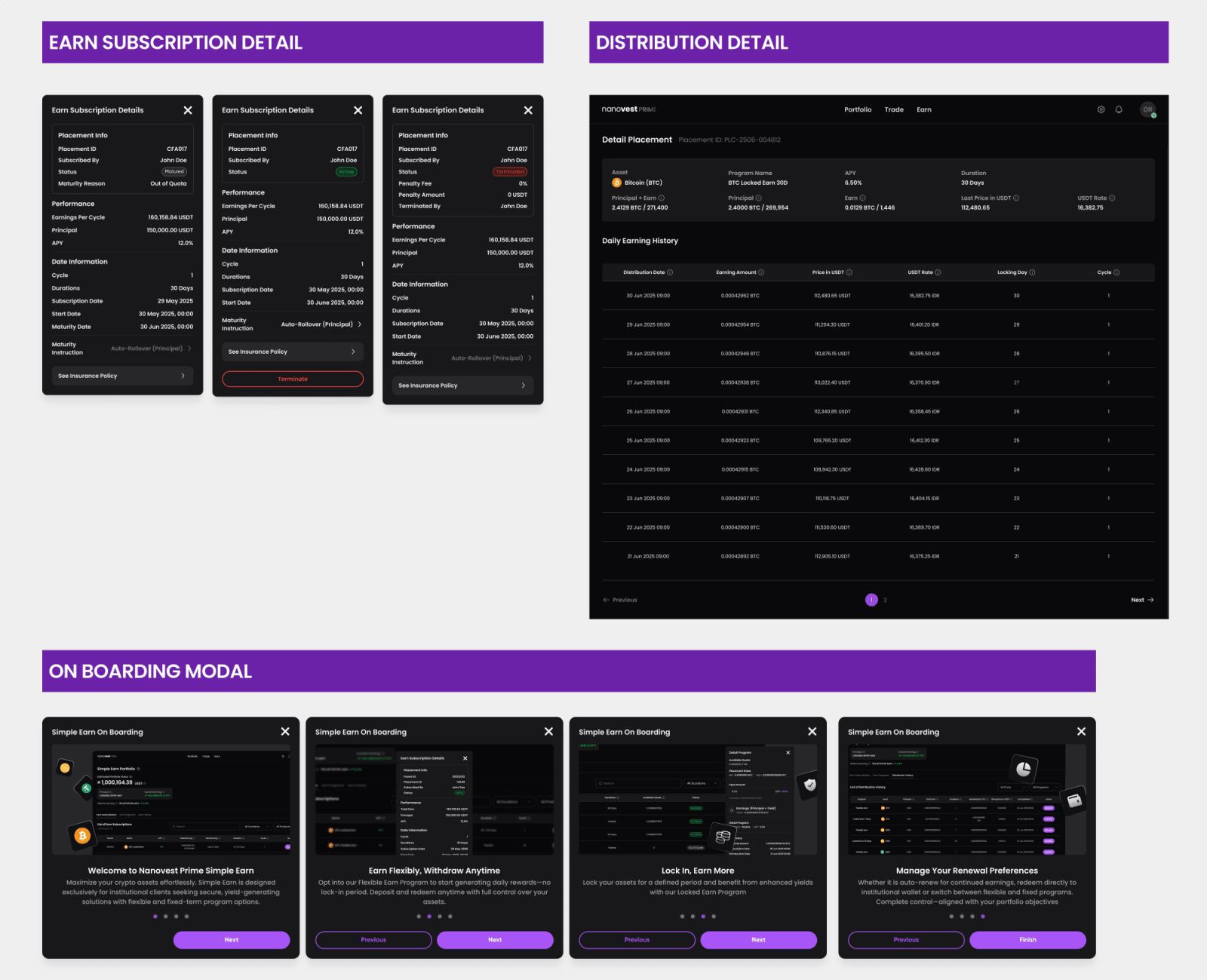 Image unavailable
Building a Shared Design Foundation
As Nanovest Prime grew across trading, portfolio, and Earn, the interface needed a consistent foundation that could support different types of financial workflows. I worked on a shared design system covering typography, color, spacing, radius, and other core guidelines, alongside reusable components such as buttons, inputs, tables, tabs, status indicators, and navigation patterns.
This helped keep the product consistent as new features were introduced, while giving the team a clearer foundation to design and build from.
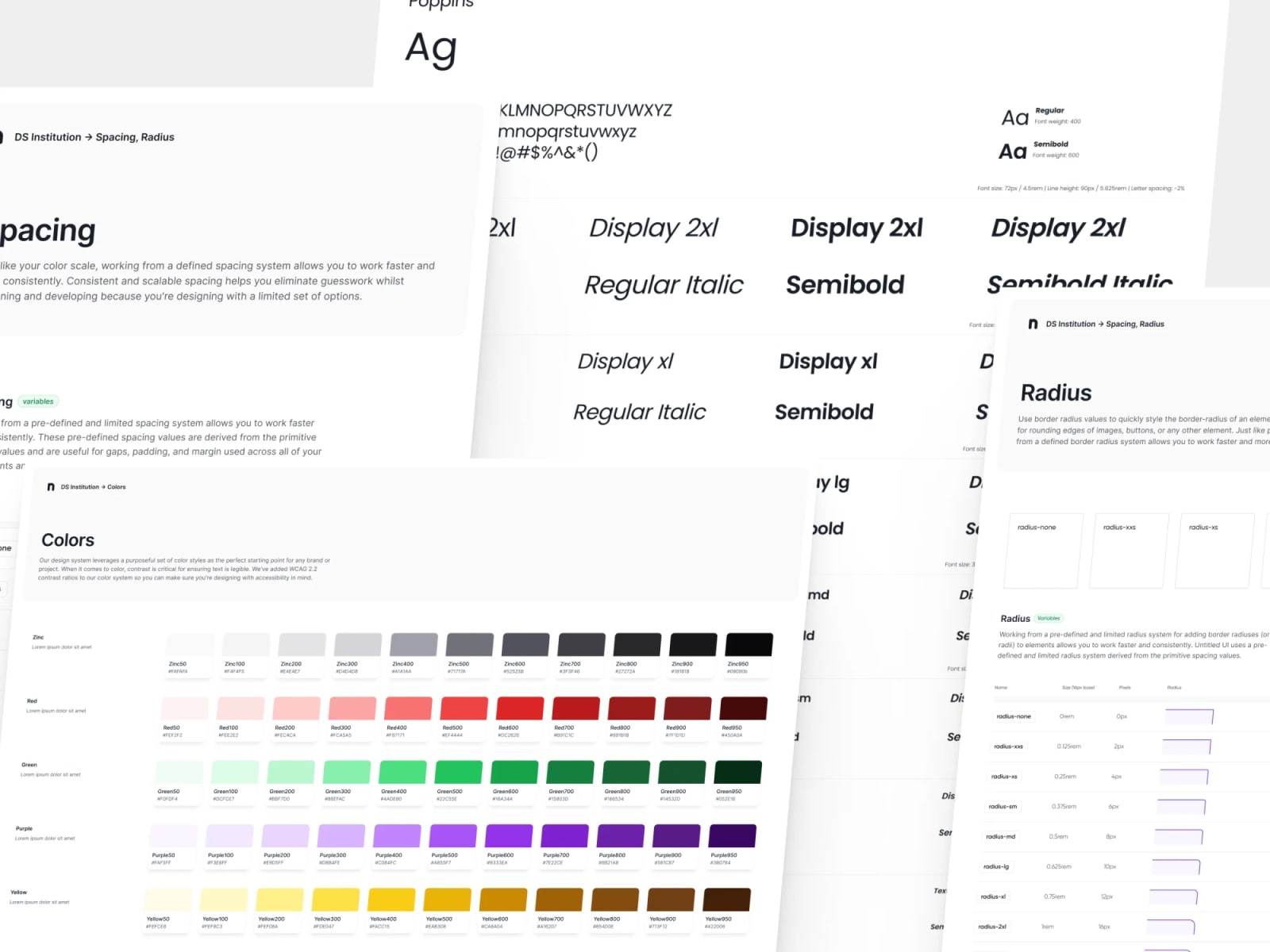 Image unavailable
Building a Foundation That Could Keep Growing
The shipped OTC experience gave Prime a focused starting point for institutional trading, while the broader design established a foundation for more advanced trading, Portfolio, and Earn workflows.
With shared patterns and a modular structure in place, new capabilities could be added without rethinking the product from scratch. Product performance metrics remain confidential.
